
The Botanical Education Trust made awards this year totaling R123 386. Because all donations received by the Trust are invested permanently, the awards were funded only by income from the investments during the last year.
Applications always exceed the funds available, so this year five were selected from the ten received. The Trustees considered that these would best serve the conservation of our indigenous flora. It is very encouraging that two of the recipients are promising young botanists.
The first, Verona Govender, recently completed her MSc degree at Wits University. She is studying pollination in grass aloes. Of the 26 species described, only three remain safe from timber plantations and invasive species that have spread across South Africa. Habitat changes affect not only plant populations but also their pollinators and disruption of effective pollinator systems can have irreversible consequences for ecological processes. This study will lead to improved management and hence conservation of these highly threatened grassland aloe populations.

Liam Taylor, also of Wits University, is the second young botanist to receive an award this year. He is investigating the role of baobab trees in supporting entire ecosystems. The very large elephant populations in our national parks are causing a huge loss of large trees, among them the baobab. This is of major concern as these trees provide a unique habitat in the landscape and their loss could induce a negative ecological cascade. The study will identify animal species, including cavity-nesting threatened birds, associated with baobabs. As the threat to baobabs from elephant destruction is an issue that needs urgent management response, it is important to help further justify that this tree species needs protection.
Because taxonomists seldom appear in the limelight of botanical research, they often find it difficult to attract funding. However, this work provides critical basic information about plant groups that can then be applied to many practical aspects such as conservation status, environmental management and environmental education. Dr Wynston Woodenberg of the South African Biodiversity Institute has been awarded a grant to undertake a taxonomic revision of the genus Portulaca. This was last done in 1862 when only three species were reported. Currently there are about nine species in the region, some indigenous and some alien. The study will assist in the conservation of indigenous species of Portulaca as well as other indigenous plants impacted by the spread of alien invasive Portulaca species.
Willem Froneman of Wits University has received a grant for his project entitled “Barleria in South Africa: Waterwise, Sun-loving, Beautiful and Prickly”. Of the approximately 330 species of Barleria worldwide, 50 are in South Africa and at least a further 12 are still to be described. This project will result in a book which will include an up-to-date revision of the genus, detailed descriptions, distribution maps and a painting of every species to facilitate identification. It will also cover horticultural aspects and deal with propagation methods of this charismatic group of plants.
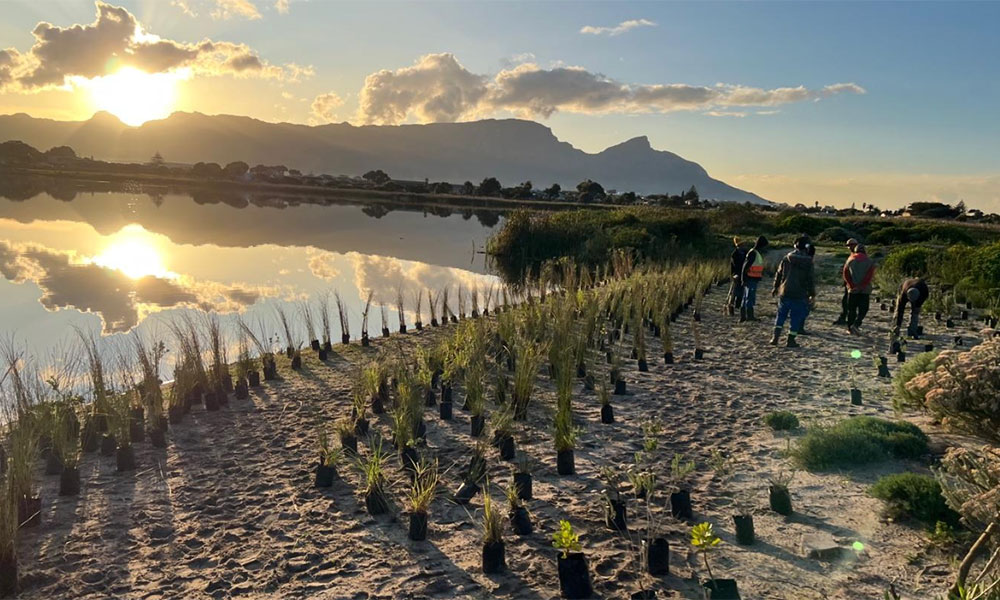
The last grant is to the Princess Vlei Restoration Project. This conservation area, on the Cape Flats, is secured in perpetuity in the environmental development plan of the City of Cape Town. Critically endangered Cape Flats Sand Fynbos and Cape Flats Dune Strandveld are found on site, which is surrounded by previously disadvantaged communities. As a result, the project is not only of vital conservation significance, as the area will be restored and rehabilitated, but it also re-introduces people to nature through community involvement and regular hands-on environmental education.

Dr Hugh Glen, who has been a Trustee since the Trust was founded in 2008, is retiring and will be replaced by Prof Glynis Goodman, a botanist at Wits University.
Please do not hesitate to contact me for further information on the Botanical Education Trust by e-mail at charlesbotha@gmail.com or on 083 7777 078. You are also most welcome to forward this e-mail to anyone else who may be interested.