This year the Botanical Education Trust received 17 mostly excellent applications, totaling an amount of almost R490 000. Because only interest on invested donations is used, the Trustees had to make difficult decisions and eventually decided on nine awards that, in their opinion, would serve conservation best. Even then, the record amount available of just over R146 000 had to be spread very thinly, with several applicants receiving only part of the amount requested. The Trust desperately needs more donations!
A variety of projects was funded, awarding applicants who are contributing in different ways to the preservation of South Africa’s indigenous flora. These ranged from young promising postgraduate students to a citizen scientist and included conservationists working to restore habitat, to restore species, and even one cataloguing priceless historical photographs which reveal long term changes in the environment.
Warburgia salutaris (Pepper-bark Tree) is highly valued in southern Africa for its use in traditional medicine. Over-exploitation and habitat loss have all contributed to it becoming endangered. In the Kruger National Park, there is a lack of fruit and viable seed production, leading to concern about its long term viability in the Park. Kaylee van den Bosch, of Wits University, received funding to assist in her MSc study to examine and address this problem.
Jessica Minnaar, another promising young student who is carrying out research for her MSc degree at Wits University, was granted an award to study the reproductive ecology of Aloe reitzii. The population of this aloe, which is endemic (occurs only in South Africa), is declining due to mining and afforestation.
Aloe peglerae is another aloe endemic to South Africa, where it has a very limited distribution range. Largely due to poaching for horticultural purposes, it is classified as Critically Endangered. Arnold Frisby, of Pretoria University, received a grant for his study which will reintroduce cultivated specimens into their natural habitat in two sites in the Magaliesberg, Gauteng/North West Province. Besides increasing the in-situ numbers of this charismatic aloe, the protocol developed can be used to help conserve other threatened Aloe species.
A decade ago, in the wake of a large coal mine north of Emalahleni, Mpumalanga Province, a population of the endangered sandstone grassland endemic Frithia humilis was translocated to various other sites. Although adult plants have thrived, regeneration has not been as successful as in the natural habitat. Prof Stefan Siebert, of North-West University, has been diligently monitoring these translocations and received funds for a 10 year follow up. Frithia translocations are often approved for coal mines so this work will help inform appropriate habitat selection for successful translocations.
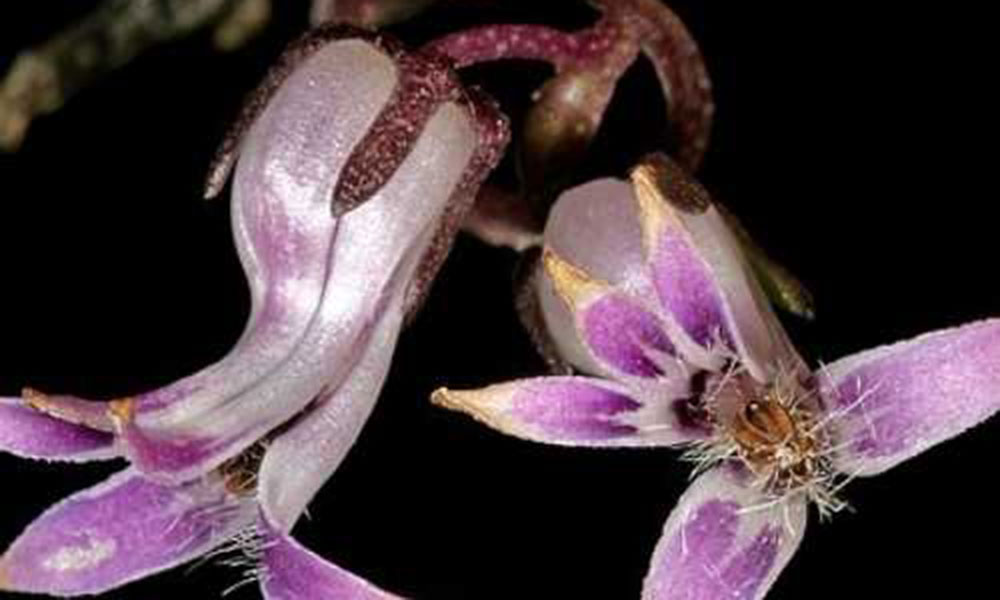
Hester Steyn of SANBI received funding to undertake a taxonomic revision of the genus Cyphia. Because taxonomists don’t appear in the limelight of botanical research, they often find it difficult to attract funding. However, their work provides critical basic information that can be applied to many practical aspects such as conservation status, environmental management and environmental education.
Another important genus considered a priority for taxonomic revision is Senecio which belongs to the daisy family. Senecio is also an economically important group as some species have been involved in poisoning of farm animals. Marinda Koekemoer of SANBI received funding to undertake this work.
Wahroonga (uMvemvane), a grassland area in the KwaZulu-Natal midlands, is of great conservation importance because it is one of the last few remaining habitats of the endangered Karkloof Blue butterfly. As it is threatened by encroachment of invasive alien species, Selvan Pillay, of Ezemvelo KZN Wildlife, was given an award to help with his work protecting and restoring the area.
Robbie Thomas of Bettys Bay, Western Cape, is a citizen scientist who is a world authority on grafting plants of the protea family. He has been awarded a grant to write up and publish his pioneering work, including his current study entitled Are grafted Proteaceae seeds viable?
A great deal of ecological information can be obtained by making comparisons between current and old aerial photographs of a landscape. For example, one can see bush encroachment that can’t be picked up in short term studies. Dr John Ward has received funding to digitally capture invaluable historical annotated photographs taken by his late father, botanist Roddy Ward, between 1955 and 2002. These photographs cover areas of KZN and parts of other SADC countries. Now, instead of being lost to future scientists, they will be available in perpetuity for research.
Please feel free to forward this information to any person or organisation you believe may be interested.