As is the case every year, the demand for grant funding far exceeded the amount available. Only income derived from investments is used, as all donations received are invested for future funding of applicants. Six applications which, in the opinion of the Trustees, would best serve the conservation of our indigenous flora were selected, totaling R115 000. Unfortunately it was not possible to grant the full amount requested to all successful applicants.
The Trustees wish to thank all our donors, large and small, who have made these grants possible. Whether an immediate contribution or a legacy, all donations permanently benefit our indigenous flora. The favorable exchange rate for donors abroad means that even small contributions translate into valuable amounts locally.
The Trust approved funding towards the publication of A Field Guide to succulent Euphorbias of southern Africa by Rolf and Alma Becker. This is the first book dedicated to the genus Euphorbia in this part of Africa since 1941. Easy to use, with annotated photographs, it will make identification easy, so raising awareness and interest in conserving these succulent plants.
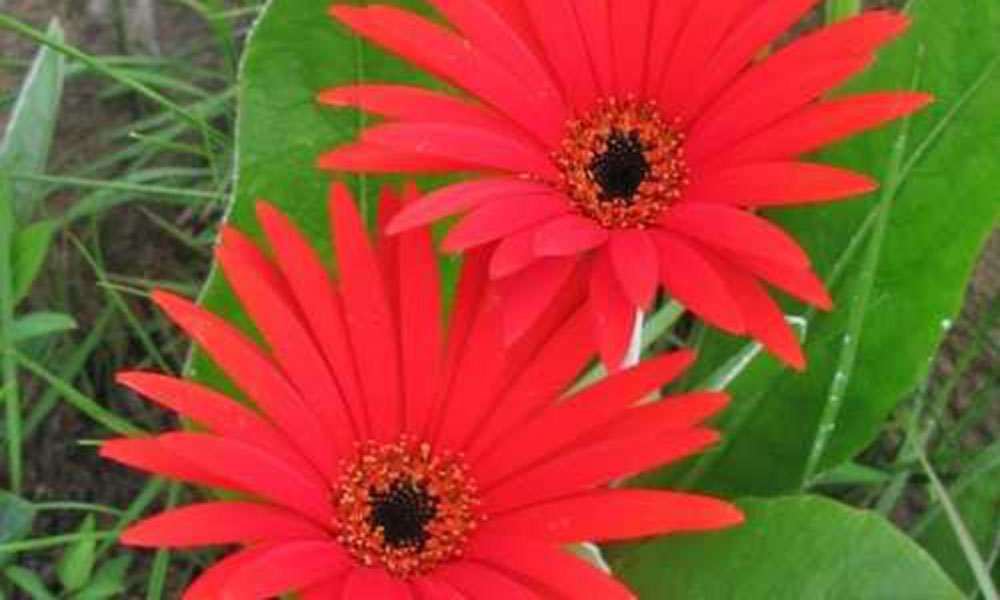
The current conservation status of the Hilton Daisy, Gerbera aurantiaca, is endangered. Only about twenty populations remain and, because of commercial forestry, these are extremely fragmented and isolated. Carolina Diller of the University of Kwa-Zulu Natal received an award to study the population genetics of this beautiful plant. Her work will have implications for conservation of the mist belt grasslands of KwaZulu-Natal.
The Drakensberg Mountains are an important area of floristic diversity. This is also a major catchment area, but only 5% is protected in nature reserves. Glynis Goodman-Cron, of Wits University, aims to help inform management approaches to protect this biodiversity hotspot and maintain its integrity. To this end, her research examines ecological drivers of diversification in the beautiful endemic genus Glumicalyx.
Marie Jordaan received funding for a taxonomic revision of part of the genus Olea. Because taxonomists seldom appear in the limelight of botanical research, they often find it difficult to attract funding. This work provides critical basic information that can be applied to many practical aspects such as conservation status, environmental management and environmental education. Olea from southern Africa was last revised 55 years ago. Marie’s proposal is dramatically different and includes more species, one previously undescribed.
Natasha Visser, of the University of Johannesburg, received the balance of her funding approved in 2017, but subject to a progress report in 2018. She is making excellent progress with her taxonomic study of the southern African grassland species Thesium. Grassland plants are of great importance and Thesium has been identified as a high priority for taxonomic revision.
In 2014, Stephen Cousins received funding from the Trust for his work aimed at restoring the critically endangered Swartland Shale Renosterveld in the Western Cape. An extremely talented young botanist, he had already produced publications describing his progress when he was tragically killed in a motor vehicle accident this year. Martina Treurnicht, of Stellenbosch University, received an award in honour of Steven to continue this work.
Please feel free to forward this information to any person or organisation you believe may be interested.