Thanks to our many donors, large and small, the Botanical Education Trust was able to make awards this year to six of the thirteen excellent applicants. The record total amount of R173 855 was funded entirely by income derived from the permanently invested donations. This illustrates how your support will The Botanical Education Trust received applications for a record total of over R446 000 this year. Because of recent donations to the Trust there has been some capital growth. However, the resultant increase in interest available for disbursement has not kept pace with the unprecedented surge in requests for grants. This means that the Trustees had the unenviable task of having to turn away most of the excellent projects, which were all aimed at preserving our indigenous flora.
It therefore remains crucial that we continue to raise further funds. The Trust has 18A status with SARS, which means that donations are tax deductible. A donation, no matter how small, will serve conservation in perpetuity as only the interest on it will be used. Payments can be made into the account of the Botanical Society of SA, Nedbank, Durban North branch code 135226, account number 1352029901, but please state clearly that it is for the Education Trust (if further details required, contact Sandra Dell @ 031 201 5111 or botsoc-kzn@mweb.co.za ).
Eventually the Trustees elected to fund the following projects from among the outstanding collection of applications received:
Clare Archer will document the current state of knowledge of the Cyperaceae family in southern Africa. More commonly known as sedges, these plants comprise an important part of our natural wetlands, forest margins and fynbos flora. Facilitating their identification and knowing more about where they occur will make a major contribution to their conservation. Ms Archer was awarded R8 000 as partial funding towards this project.
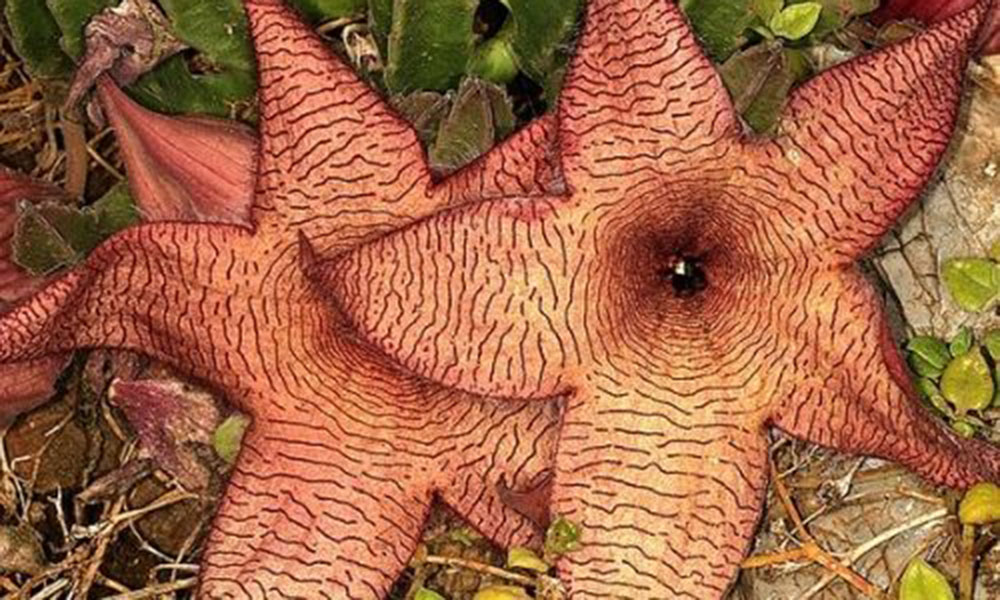
Up-and-coming young botanist, Stephen Cousins, received R35 000 towards his study aimed at restoring the floral diversity of critically endangered Swartland Shale Renosterveld in the Western Cape, while another young botanist, Marc du Plessis, was awarded R25 000 for his research into pollination ecology and evolution of South African stapeliads. It is essential to understand the interactions between these flowers and their pollinating visitors in order to develop appropriate conservation measures.
The last recipient, Marinda Koekemoer, has previously received support from the Trust which resulted in excellent work and she has since authored some highly acclaimed botanical literature. On this occasion, she has been awarded R26 400 towards the publication of the Complete Plant Families of southern Africa on which she is currently working. This book, which is designed to help users appreciate our country’s fascinating and beautiful floral diversity, will provide information in a simple and understandable way making it suitable for users at all levels.