The Botanical Education Trust has announced its awards for the year 2011. Trustees were faced with difficult decisions because a total amount of over R617 500-00 was requested to support eleven excellent applications. As awards are made from the interest earned on donations to the Trust, only R72 000-00 was available for disbursement. Of the four applicants eventually selected, only one received the full amount requested and it was unfortunately possible to grant the other three no more than partial funding. All the recipients are compelled to report back to the Trust regarding their progress within a specified period.
Ms Janet Taylor, an MSc student at the University of the Free State, was awarded R12 000-00 for her project entitled “Population Dynamics of Acacia nilotica within northern KwaZulu-Natal”. As the proliferation of this indigenous plant is negatively affecting the floral and faunal biodiversity of KZN (and some other provinces), the study hopes to provide knowledge-based management solutions, rather than careless and impulsive controls.
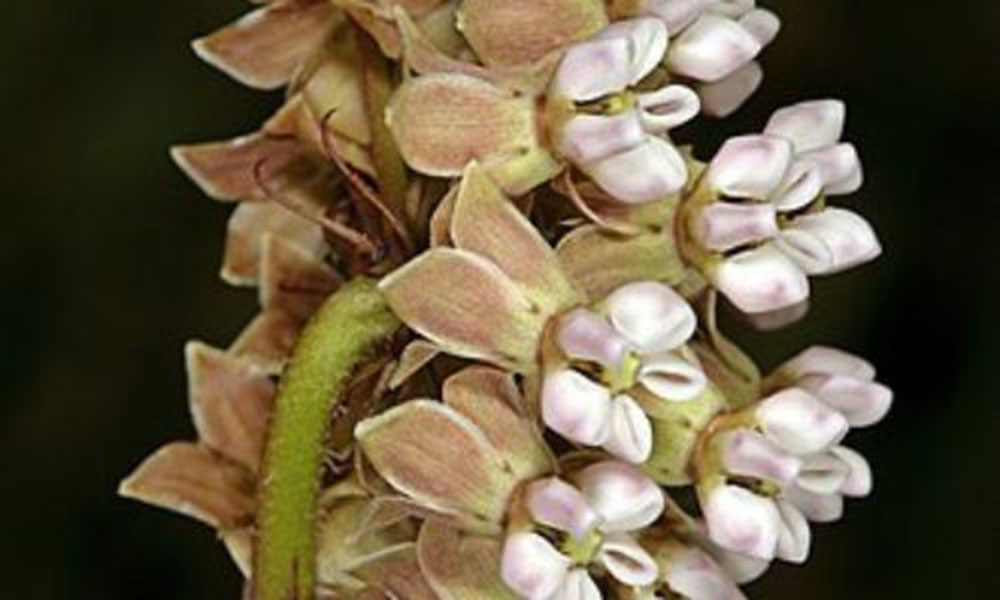
Mr Stoffel Bester will receive an amount of R20 000-00 towards his research in the Apocynaceae (Milkweed family). This family contains the highest number of data deficient species in southern Africa. Research into such species of conservation concern will provide information essential to conservation authorities and improve EIA processes.
A further amount of R20 000-00 was made available towards Dr Christien Bredenkamp’s publication in progress, Flora of the Eastern Cape. This book, which will cost a much larger amount to produce, will improve the level of knowledge of flora which is of global significance. The high plant diversity of the region covered by the publication includes eight of the nine biomes of South African flora.
The fourth successful applicant, Ms Hester Steyn, was also awarded R20 000-00 for her research into the genus Acanthopsis. The conservation status of most species in this genus is poorly known and this research will help facilitate the preservation of threatened species. Without appropriate knowledge, the protection of our indigenous plants becomes virtually impossible.The seven unsuccessful applications were also well motivated and worthy of support, being in line with the Trust’s objective to conserve indigenous vegetation. They involved Aloe peglerae, Aloe plicatilis, Aspalathus in the Cederberg, Prunus africana, avian nectarivores’ affect on bird pollinated plants, secretory trichomes of indigenous medicinal plants and a tree leaf key for a field guide. It is thus clear just how important it is that the Trust obtains more income to fund additional projects and it is for this reason that further appeals are being made to the public for contributions to the Trust.